
Invisalign Attachments: What They Are and Why You Might Need Them
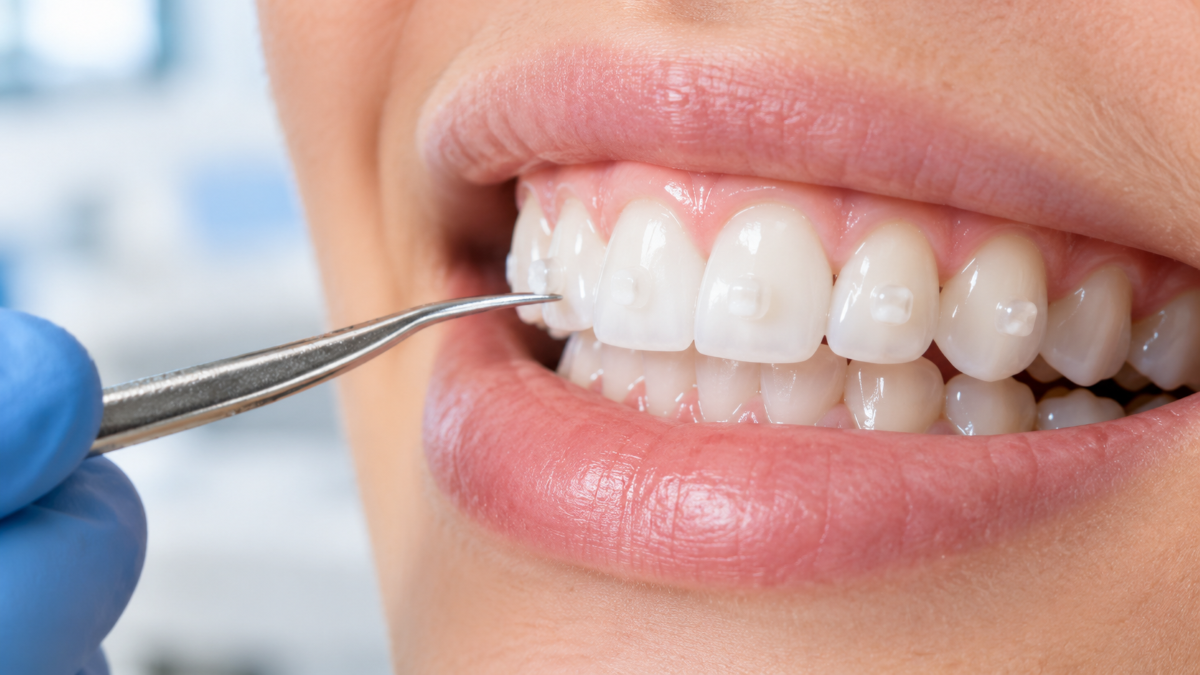
Invisalign attachments are small, tooth-coloured bumps of composite resin bonded to certain teeth during clear aligner treatment. They give the aligners extra grip, so they can guide movements that plastic alone may struggle with. Not every case needs them, and whether yours does is confirmed at your consultation in Welland.
The Small Bumps That Help Aligners Work
- Attachments are small, tooth-coloured shapes bonded to the front of selected teeth for the length of treatment.
- They act like handles, helping aligners rotate, tip or shift teeth that are harder to grip.
- Placing them usually involves no drilling, and they are polished off when treatment ends.
- They can make aligners feel snugger and may pick up stains, so cleaning and wear habits matter.
- Not every plan uses attachments, so whether you need them is confirmed at your consultation.
Many adults are surprised to learn that clear aligner treatment can involve more than the aligners themselves. Attachments are a common part of treatment, and knowing what they do makes them much less of a mystery. This guide explains what they are, why they are used and what living with them is like, so you know what to expect before you start treatment in Welland.
What Are Invisalign Attachments?
Attachments are small shapes made of tooth-coloured composite resin, the same type of material used in cosmetic bonding. They are bonded to the front surface of selected teeth and stay in place until treatment is complete.
Here is what to know about them:
- Size: they are small, usually just a few millimetres across.
- Shape: they can be rectangles, ovals or bevelled ridges, depending on the movement each tooth needs.
- Colour: they are matched to your teeth, so they blend in rather than stand out.
- Number: some plans use a few, others use more, and some use none at all.
Each aligner has small pockets shaped to fit over the attachments. When the aligner clicks into place, those pockets lock onto the attachments and give the aligner a firmer hold on the tooth.
Why Would You Need Invisalign Attachments?
Smooth teeth can be hard for plastic to grip, especially when a tooth needs to turn or move in a particular direction. Invisalign attachments give the aligner a surface to push against, which helps it apply force exactly where it is planned.
They are often used for movements such as:
- Rotating a tooth, especially rounded teeth like canines and premolars
- Moving a tooth up or down in the gum line so it lines up with its neighbours
- Tipping or angling a tooth, including adjusting the position of the root
- Holding the aligner firmly so it stays seated during treatment
- Supporting bite correction, where elastics and attachments work together
If your treatment includes bite changes, our guide on whether you can Invisalign fix an underbite or overbite explains how attachments and elastics help.
Can You Have Invisalign Without Attachments?
Some cases do not need them. Simple movements, such as closing a small gap, may be possible with the aligners alone. Whether your plan uses attachments depends on the movements your teeth need, and it is confirmed at your consultation after your digital assessment.
How Are Invisalign Attachments Placed?
Placing attachments is a quick, comfortable visit for most people, usually done when you receive your first aligners. The process uses the same bonding approach dentists use for small cosmetic repairs.
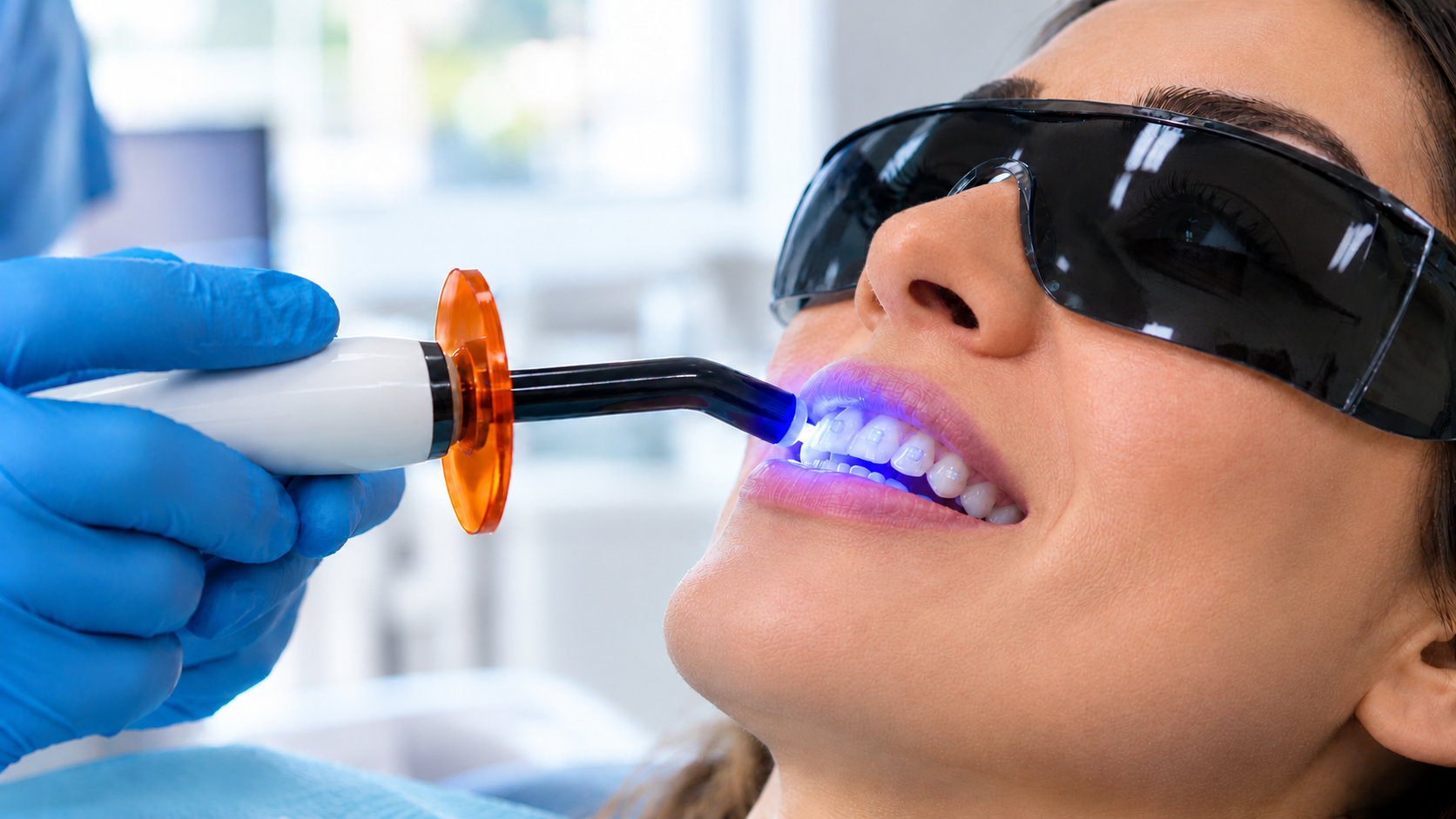
The Canadian Dental Association describes bonding as preparing the tooth by roughening the surface and applying a bonding agent, then applying composite resin that is shaped and hardened with a special light. For attachments, the steps generally look like this:
- The teeth are cleaned and dried.
- A mild solution is applied to roughen the tooth surface slightly so the resin can bond.
- A bonding agent is painted on the selected teeth.
- A template aligner filled with tooth-coloured resin is placed over your teeth to shape each attachment.
- A special light hardens the resin, then the template is removed and any excess is cleaned away.
There is usually no drilling and no need for freezing. To learn more about how this material is used on its own, see dental bonding.
Do Invisalign Attachments Hurt?
Most people find that placing attachments does not hurt. The bigger change is how your aligners feel once the attachments are on.
Here is what many adults notice in the first few days:
- A snugger fit, since the aligners now grip the teeth more firmly
- Pressure on certain teeth, which is a sign the aligners are working on them
- A rough feeling on the inside of the lips until you get used to it
- Aligners that take more effort to remove, especially at first
These sensations usually settle as you adjust. If an edge feels sharp or rubs your lip, let your dentist know so it can be checked.
What Is It Like to Live With Attachments?
Attachments become part of your daily routine during treatment. A few habits help keep them in good shape and keep treatment on track.
Are Attachments Noticeable?
Because they are tooth-coloured, attachments are hard to notice from a normal speaking distance. Up close, or when the aligners are out, they may be visible as small raised shapes. Their colour can change slightly over time if they pick up stains.
How Do You Keep Attachments Clean?
Food and plaque can collect around the edges of each attachment. Brush slowly around them, and check the matching pockets inside your aligners as you clean those too. Our guide on how to clean Invisalign aligners covers a full daily routine, including cleaning crystals.
What Can Stain or Damage Attachments?
Composite resin can pick up colour, and it can come loose if it is put under heavy force. To protect your attachments:
- Take aligners out before eating or drinking anything other than water.
- Brush after coffee, tea or red wine, or rinse with water if you cannot brush.
- Be careful with very hard foods, such as hard candy or ice.
- Remove aligners gently, starting from the back teeth, rather than pulling at the front.
What If an Attachment Falls Off?
It can happen occasionally. If you notice an attachment is missing, keep wearing your aligners and let the clinic know, since the missing attachment may need to be replaced to keep that tooth tracking with the plan.
What Happens to Attachments When Treatment Ends?
Once your teeth have reached their planned positions, the attachments are removed. The resin is polished off the tooth surface, and the tooth is smoothed so it looks and feels like the rest of your teeth.
After that, a retention plan is discussed with you at Rose City Dental Centre, so you know how to look after your new smile.
How Are Attachments Planned at Rose City Dental Centre?
At Rose City Dental Centre, every Invisalign plan starts with an initial consultation and digital assessment. That is where the dentist reviews the movements your teeth need and whether attachments are part of your plan.
- An Invisalign-certified dentist provides treatment, with orthodontist involvement when required.
- Custom aligners are provided in stages, shaped to fit any attachments in your plan.
- Regular in-person follow-up visits check that your teeth are tracking as planned.
- Refinements are included if your treatment goals evolve.
For the wider picture on whether clear aligners suit your life, read Invisalign for adults: is it worth it?. For timing, cost and insurance details, see Invisalign in Welland.
FAQs About Invisalign Attachments
Wondering Whether Your Plan Will Need Attachments?
Still unsure what attachments would mean for your teeth and your routine? Your consultation shows whether your plan includes them, and why.
- A plan built for your teeth: a digital assessment maps the movements your teeth need before treatment begins.
- Certified care: an Invisalign-certified dentist provides treatment, with orthodontist involvement when required.
- Monitored progress: regular in-person visits check every stage, with refinements included if goals evolve.
Book an Invisalign consultation in Welland to see what your treatment plan would involve.
Rose City Dental Centre, 429 Thorold Road, Welland, ON L3C 3W4